
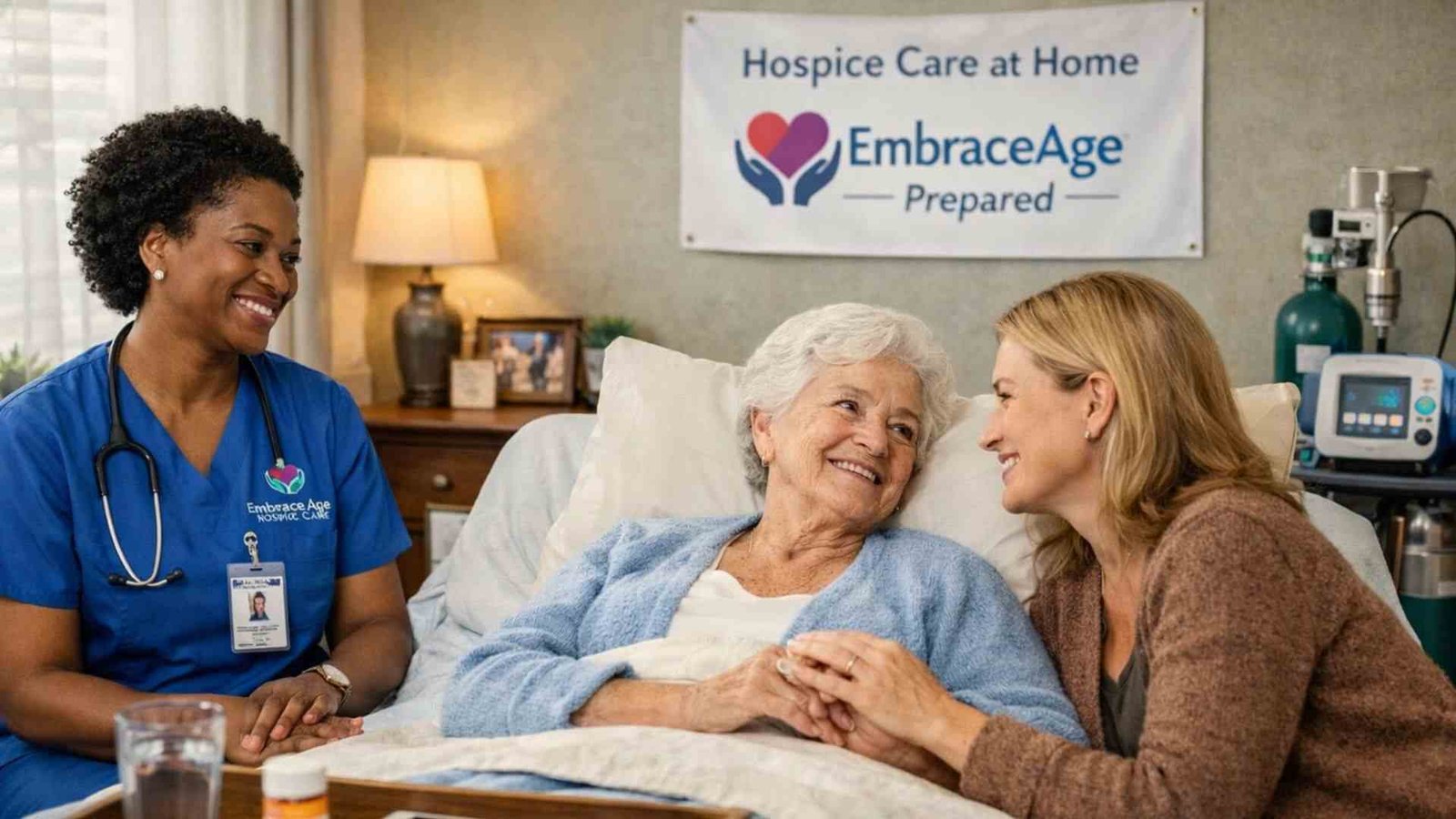
What Is Hospice Care At Home Embraceageprepared?
Introduction
When families face a serious or terminal illness, one of the most important questions they ask is how to ensure comfort, dignity, and peace during the final stage of life. Understanding what hospice care at home embraceageprepared can help families make compassionate and informed decisions. Hospice care at home focuses on comfort rather than cure, allowing individuals to remain in familiar surroundings while receiving professional medical, emotional, and spiritual support.
The concept of EmbraceAgePrepared goes beyond traditional hospice services. It emphasizes emotional readiness, advance planning, and a family-centered approach to end-of-life care. Instead of reacting in crisis, families can prepare thoughtfully and respectfully for this stage of life. In this complete guide, you will learn what hospice care at home truly means, how EmbraceAgePrepared supports compassionate preparation, who qualifies for hospice services, and how families can begin this journey with confidence and peace of mind.
What Is Hospice Care at Home?
Hospice care at home is a specialized type of medical and supportive care designed for individuals who are living with a terminal illness and are no longer seeking curative treatment. Rather than focusing on aggressive medical procedures to cure a disease, hospice care centers on comfort, pain relief, and quality of life.
In home hospice care, services are provided in the patient’s residence. This could be a private home, an assisted living facility, or a family member’s home. Being in a familiar environment often reduces stress and anxiety, helping patients feel safe and supported. Medical professionals visit regularly to manage symptoms such as pain, shortness of breath, fatigue, and discomfort.
Unlike traditional medical care that aims to cure illness, hospice care accepts that the illness may not be reversible. The goal shifts to improving daily comfort and emotional well-being. Patients can spend meaningful time with loved ones without the burden of frequent hospital visits. By choosing hospice care at home embraceageprepared, families prioritize dignity, peace, and personalized support during life’s final chapter.
The Concept Behind EmbraceAgePrepared
EmbraceAgePrepared is a thoughtful approach that combines hospice care principles with proactive planning and emotional readiness. The idea is simple yet powerful: instead of fearing aging or end-of-life transitions, families can prepare in advance and embrace this stage with understanding and compassion.
At its core, EmbraceAgePrepared encourages conversations about care preferences, medical wishes, and personal values before a crisis occurs. This may include discussing advance directives, preferred care settings, and spiritual beliefs. By planning ahead, families avoid confusion and stress during critical moments.
This concept also supports dignity and respect. Patients remain active participants in decisions about their care. Their voices are heard, and their wishes are honored. EmbraceAgePrepared aligns closely with hospice fundamentals by focusing on comfort, emotional well-being, and family involvement.When families understand what hospice care at home embraceageprepared truly means, they recognize that it is not about giving up. Instead, it is about choosing meaningful care that supports physical comfort, emotional stability, and spiritual peace while honoring the person’s life journey.
Key Goals of Hospice Care at Home
The primary goal of hospice care at home is comfort. Pain and symptom management are central priorities. Skilled nurses and physicians work together to reduce discomfort and help patients feel as peaceful as possible. This includes managing pain, nausea, breathing difficulties, and anxiety.
Another important goal is enhancing quality of life. Even during advanced illness, patients deserve meaningful experiences. Hospice care helps individuals enjoy time with loved ones, engage in conversations, and participate in small daily routines that bring joy.
Emotional and spiritual support is equally important. Serious illness affects not only the body but also the mind and spirit. Social workers and counselors provide guidance to patients and families. Spiritual counselors or chaplains offer comfort based on personal beliefs and values.Through hospice care at home embraceageprepared, families also focus on advance planning and shared decision-making. Loved ones are encouraged to participate actively in care discussions. This approach strengthens family bonds and ensures that care aligns with the patient’s wishes. The ultimate aim is dignity, respect and peace.
Who Is Eligible for Hospice Care at Home?
Eligibility for hospice care typically requires a physician’s certification that the patient has a life expectancy of six months or less if the illness follows its natural course. This does not mean the patient will pass away within six months; some individuals receive hospice care for longer periods depending on their condition.
Common conditions that may qualify include advanced cancer, heart failure, lung disease, dementia, kidney failure, and other serious illnesses. The key factor is that the patient has chosen to focus on comfort rather than curative treatment.
A physician referral is usually necessary to begin the process. Medical documentation confirms eligibility and ensures that the patient meets hospice criteria. Once approved, a care team develops a personalized care plan tailored to the patient’s needs.Choosing hospice care at home embraceageprepared reflects a shift in goals. Instead of pursuing aggressive treatments, the focus turns to symptom control and emotional support. This decision is deeply personal and should be made with medical guidance and family discussion.
Hospice vs. Palliative Care
Many people confuse hospice care with palliative care, but they are not the same. Both focus on comfort, yet they differ in timing and eligibility.
Palliative care can begin at any stage of a serious illness. It may be provided alongside curative treatments such as chemotherapy or surgery. The goal is to relieve symptoms and improve quality of life, regardless of prognosis.Hospice care, on the other hand, is intended for individuals nearing the end of life who are no longer seeking curative treatment. It is typically offered when life expectancy is about six months or less.
Here is a simple comparison:
| Feature | Hospice Care | Palliative Care |
| Stage of Illness | End-stage (6 months or less) | Any stage of serious illness |
| Curative Treatment | Not pursued | Can continue |
| Focus | Comfort and dignity | Symptom relief + treatment support |
| Location | Often at home | Hospitals, clinics or home |
Understanding this difference helps families choose the right care at the right time.
The Home Hospice Care Team
Hospice care at home is delivered by a coordinated team of professionals. Each member plays a specific role in supporting the patient and family.Registered nurses monitor symptoms, manage medications, and provide medical care. Hospice physicians or medical directors oversee treatment plans and ensure comfort-focused care remains effective.
Home health aides assist with daily activities such as bathing, dressing, and hygiene. Their support helps maintain dignity and cleanliness while easing caregiver responsibilities.Social workers offer emotional counseling and help families navigate practical matters, including insurance and community resources. Spiritual counselors provide guidance aligned with personal beliefs.
Volunteers may also visit to offer companionship or provide short breaks for caregivers. EmbraceAgePrepared highlights strong team coordination so that every aspect of care, medical, emotional and spiritual, is addressed with compassion and consistency.
Core Services Provided at Home
Hospice services at home are comprehensive. Medical support includes pain and symptom management, medication coordination, and delivery of medical equipment such as hospital beds or oxygen supplies.Emotional and spiritual care is integrated into the plan. Counseling sessions help families cope with fear and grief. Chaplain visits provide spiritual comfort when desired.
Practical daily assistance is another essential component. Home health aides help with mobility, hygiene, and personal comfort. They ensure patients remain clean, comfortable, and safe.These combined services make hospice care at home embraceageprepared a holistic solution that addresses every dimension of well-being, not just physical symptoms.
Levels of Hospice Care at Home
Hospice services follow four main levels of care in the United States. Routine home care is the most common level and involves regular visits from hospice staff.Continuous home care is short-term, intensive support during a medical crisis. Nurses may remain for extended hours to stabilize symptoms.
Respite care provides temporary relief for family caregivers. The patient may stay in a facility for a few days while caregivers rest.General inpatient care is short-term hospital-level support when symptoms cannot be managed at home.These levels ensure flexibility and support in different situations.
Benefits of Hospice Care at Home
One of the greatest benefits of hospice care at home is comfort. Patients remain in familiar surroundings, surrounded by loved ones. This environment often reduces anxiety and promotes emotional security.
Care plans are personalized. Each patient’s needs, values, and cultural preferences are respected. Emotional and bereavement support continues even after the patient passes, helping families process grief.Hospice services are often covered by Medicare and many insurance plans, reducing financial stress. By choosing hospice care at home embraceageprepared, families receive comprehensive support that strengthens both patient comfort and caregiver confidence.
How Does Hospice Care at Home Work?
The process typically begins with a physician referral and eligibility confirmation. After approval, the hospice team conducts an initial assessment to develop a personalized care plan.
Regular visits follow, depending on patient needs. Nurses adjust medications, aides assist with personal care, and counselors provide emotional guidance.A care agreement outlines services, ensuring clear communication. Ongoing symptom monitoring keeps the patient comfortable. The team remains available for questions or urgent concerns, providing peace of mind.
How to Start Hospice Care at Home?
Starting hospice care begins with a conversation. Speak with your doctor about eligibility and care goals. If hospice is appropriate, request a referral.Next, contact a hospice provider. Schedule an initial visit for assessment and planning. The team will explain services and answer questions.Once the care plan is approved, services begin. Families receive guidance on what to expect and how to participate in daily care routines.
Family Involvement and Support
Families play a central role in hospice care at home. They receive education on symptom management and medication schedules. Shared decision-making ensures that care reflects the patient’s wishes.
Bereavement support continues after loss, offering counseling and emotional guidance. This extended care helps families heal gradually and find comfort.
Common Misconceptions
Many believe hospice care means giving up. In reality, it changes the focus from cure to comfort. Hospice does not accelerate death; instead, it supports natural processes with dignity.
Another misconception is that patients must leave home. In fact, hospice care at home embraceageprepared allows individuals to remain where they feel most secure.
FAQs About Hospice Care at Home
1. Can hospice care be stopped if the patient improves?
Yes. If a patient’s condition stabilizes or improves, hospice care can be paused, and medical treatment may resume.
2. Are family members trained to provide care?
Yes. Hospice teams teach families how to manage medications and recognize symptoms.
3. Is hospice only for cancer patients?
No. Many conditions, including heart and lung diseases, qualify.
4. Does hospice provide equipment at home?
Yes. Necessary medical equipment is usually delivered and set up at home.
5. Can hospice care continue beyond six months?
Yes, if a physician confirms continued eligibility, care may be extended.
Conclusion
Understanding what hospice care at home embraceageprepared truly means helps families approach end-of-life care with compassion and clarity. Hospice focuses on comfort, dignity, and emotional support rather than cure. Through coordinated care, personalized planning, and family involvement, patients can spend meaningful time in familiar surroundings. By embracing preparation and open conversations, families create a peaceful and respectful experience that honors life’s final chapter.
Looking for more Article? Check out my website for the latest content.